As the conditions change, the work has to change with them.
We help organizations get work moving in the right direction - and keep it moving as the stakes increase
You may be here if...
The ground under the work keeps shifting
Ambition or responsibility has grown, but structures haven't caught up
Uncertainty and risk are shaping decisions more than before
People are absorbing strain the system wasn't meant to hold, or ...
Continuing as-is no longer means moving forward
How we help
Brighter Spark works across a range of contexts—from early stage teams to established institutions—where strong work is already happening, and the conditions around it are shifting. We work with organizations to understand what is happening beneath the surface and help leaders and teams move forward with clarity. This often includes:
Structured assessments to clarify what is driving outcomes and tension
Focused interventions to stabilize pressure points and unblock progress
Direct coaching and support to leaders and teams to translate insight into action
Practical systems and structures that hold as complexity increases
Learn more about Our Approach and our Services
If this work feels relevant to where you are now, the next step is to share a bit about your situation.
Our People
Brighter Spark is not organized around fixed roles or static teams.
We work with a stable core of senior practitioners who hold the direction, meaning, and judgment of the work, and we assemble delivery teams to fit the specific needs of each engagement.
This allows us to stay accountable for the coherence and quality of the work without requiring the same people to do every part of it.
The core team
The core team is based in Hamilton, Ontario, and works with partners across Canada and beyond.
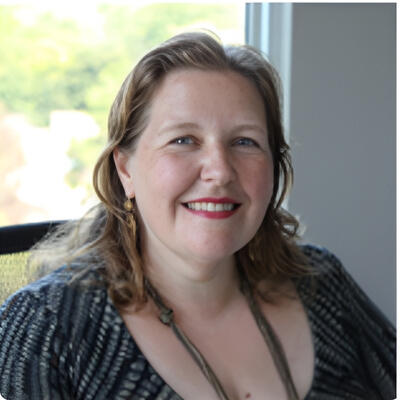
Allison Van (MPP) - Principal
Allison is responsible for holding the overall direction, coherence, and judgment of Brighter Spark’s work. She works across engagements to ensure that complexity is handled with care, that early choices don’t quietly constrain what comes next, and that the work stays grounded in real conditions rather than abstractions.
Allison is often directly involved at key moments — particularly where stakes are high or decisions carry long term consequence — but her primary role is to ensure the work as a whole holds together over time.
Her first career, at age eight, was as a professional clown — an early education in timing, attention, and how easily people disengage when things lose their rhythm.
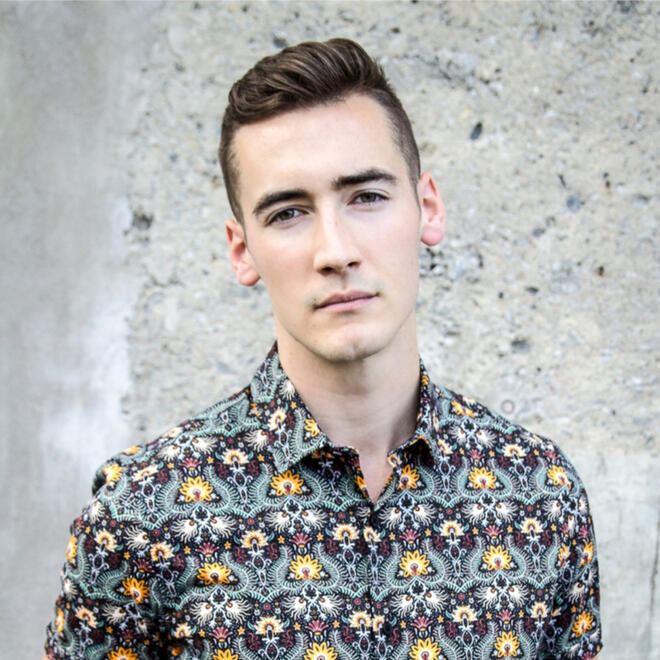
Evan Gravely (MA) - Senior Practitioner
Evan is responsible for building the structures and systems that allow work to move from intent to execution. He helps shape teams, processes, and ways of working so that ideas can become implementable plans without collapsing under their own weight.
Evan is often involved where work needs to scale, coordinate across stakeholders, or translate insight into action that multiple people can carry forward with confidence.
Outside of work, Evan gravitates toward activities that reward sustained focus — reading, trail runs, and the occasional video game.
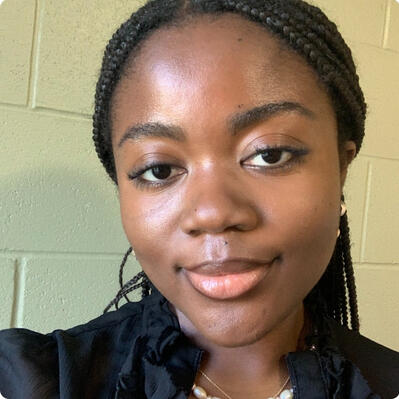
**Ver-Se Denga (MSc) - Research & Insight Lead **
Ver Se is responsible for ensuring that evidence, insight, and human experience are meaningfully integrated into decision making. As a cognitive psychologist specializing in memory, she focuses on how people actually understand, retain, and act on information — not just how it’s presented.
Ver Se works across projects to bridge data and lived experience, helping ensure that findings support better judgment over time rather than becoming static reports.
She is currently completing doctoral research in psychology and is rarely far from live music or bubble tea.
Extended collaborators
Delivery teams are assembled to fit the work.
Depending on the engagement, we work with additional researchers, facilitators, technologists, analysts, designers, and practitioners who bring specific expertise, sector knowledge, geographic proximity or lived experience. These collaborators are integrated into projects as part of the team, with clear roles and accountability.
This approach allows Brighter Spark to hold work that is larger, more specialized, or more complex than any fixed team could manage — without losing continuity, care, or judgment.
Our Approach
People come to us for different reasons.
Sometimes what they’re doing isn’t producing the movement they need.
And sometimes they’re ready to do something bigger — and want to build it well.
In both cases, early decisions start to matter more. Small choices shape risk, momentum, and what becomes possible later.
Our work often begins with a focused First Move — a way to get oriented, reduce unnecessary friction, and set direction with confidence.
From there, we work alongside teams as thinking partners, advisors, and collaborators — supporting the work as it evolves and the stakes change.
The goal isn’t just a good start — it’s progress you can lead, learn from, and build on.
How We Work in Practice
We don’t begin by prescribing solutions or rolling out frameworks.
We start by paying close attention to how work is actually happening — where decisions sit, how responsibility is distributed, and which pressures are shaping behaviour in ways people may not yet see.
From there, we work alongside teams to focus effort, reduce unnecessary friction, and support movement that can be sustained as conditions change.
We work at the pace the situation requires — moving quickly when clarity exists, and deliberately when choices are consequential.
How We Usually Begin
Many engagements begin with a First Move — a focused piece of work designed to establish direction, reduce friction, and create momentum with confidence.
First Moves are not the boundary of our work. They’re a way to begin well.
Some clients engage us for a single, well defined starting point. Others continue working with us as advisors and collaborators as the work grows, scales, or enters new territory. We don’t force an arc or prescribe a path — we stay responsive to what the work actually needs.
How We Relate to You
We assume the people closest to the work already hold essential knowledge — our role is to help that knowledge surface and guide action.
We work with real conditions, not ideal ones — fatigue, pressure, competing demands, and imperfect information are part of the work, not obstacles to it.
We pay attention to how culture and informal practices shape what’s possible in practice, not just what looks good on paper.
We support movement people can sustain, stand behind, and learn from as the work continues.
Our role isn’t to replace your expertise or direction. It’s to help your effort start working better — and keep working as the stakes increase.
Where to Go Next
Services
Some work doesn't fit cleanly into one lane. It spans strategy, evidence, facilitation, and implementation.Rather than offering these separately, our services take shape as integrated First Moves—focused starting points that help organizations, networks, and communities take the right action for the Moment they're in.Review our Moments and First Moves below and see which one fits your situation. If you're not sure, we can help you find a clear starting point.If you're looking for more specific, extended, or custom work, you can explore our custom projects option at the bottom of the page.
First Moves
Stabilizing Success

The Moment: Success in one area is quietly weakening the whole
Attention has narrowed around what's working — and other parts of the organization are absorbing the strain. Limits have softened, tradeoffs have gone unspoken, and the conditions holding things together are becoming fragile.
A First Move: We meet individually with people across the organization to understand how the work is actually being sustained — then work with leadership to surface what's gone unspoken and develop a practical plan to rebalance before strain becomes structural.
Evidence Alignment
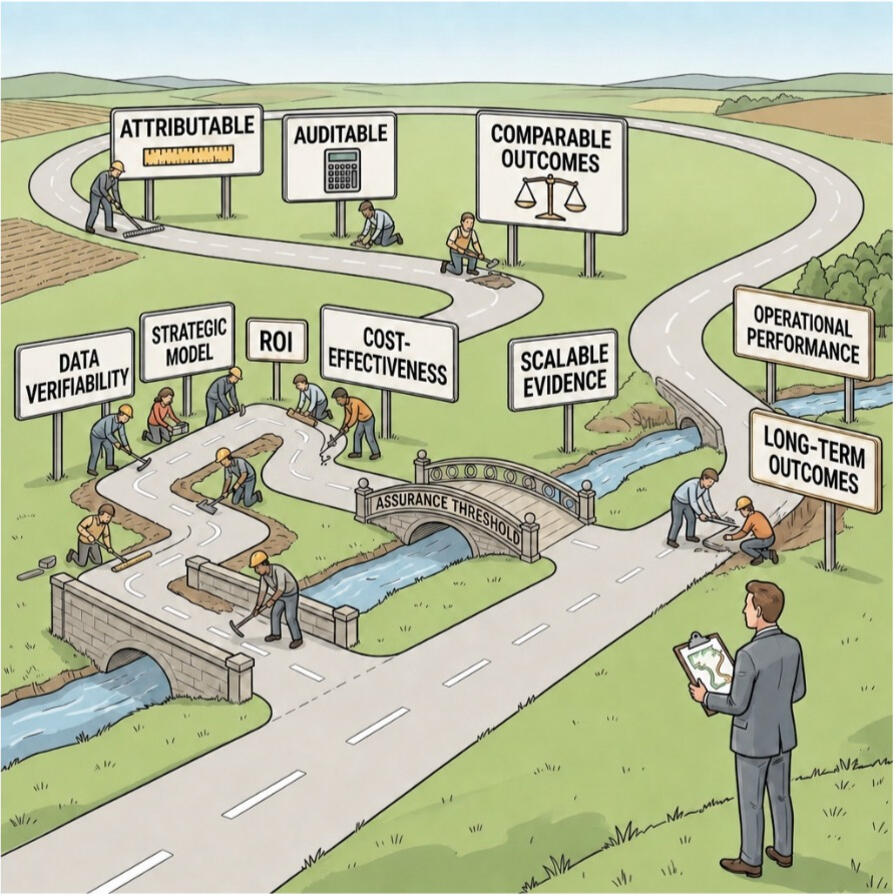
The Moment: When evidence standards quietly set direction
The way impact is defined and measured determines the direction work can take. When reporting requirements pull harder than the work itself, what gets measured starts shaping what gets prioritized — and outcomes that are harder to capture begin to disappear from view.
A First Move: We work with the data that already exists to clarify what can be said credibly now, where evidence and decisions are misaligned, and what a realistic path to strengthening both looks like — without overbuilding or distorting the work.
A Shared View
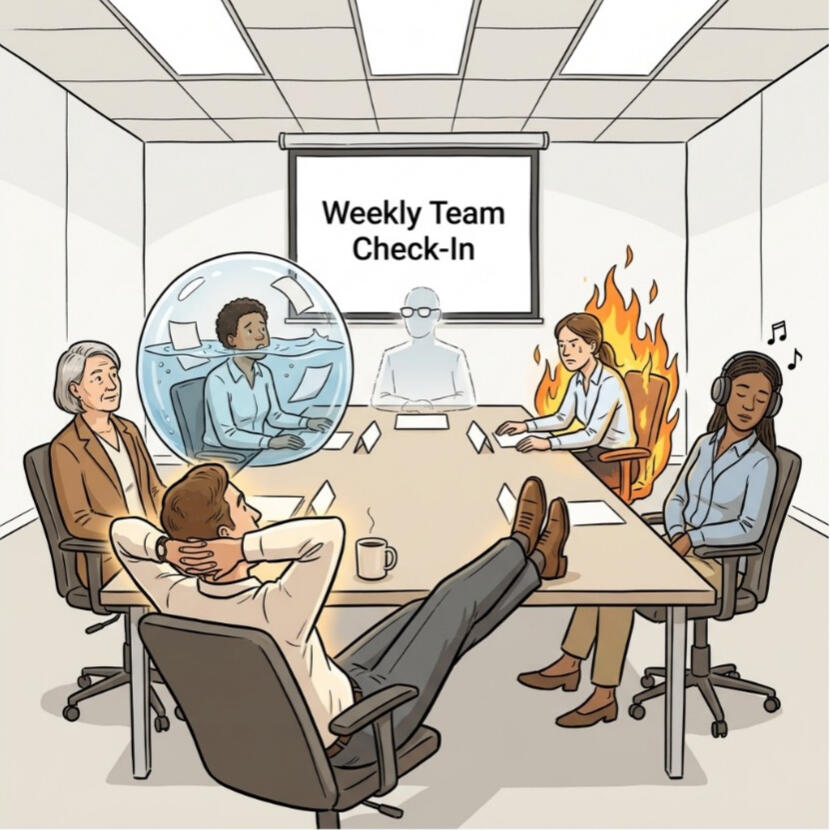
The Moment: The same work doesn't feel the same to everyone
Even in strong teams, not all experiences of the work are visible — especially from where decisions are made. The team appears to be functioning, but strain, disconnection, or uneven conditions are quietly shaping how people contribute and hold up over time.
A First Move: Through structured engagement across the team — individual conversations, observation, and materials review — we build a grounded picture of how the work is actually being lived, and what patterns leadership currently can't see.
Community Clarity
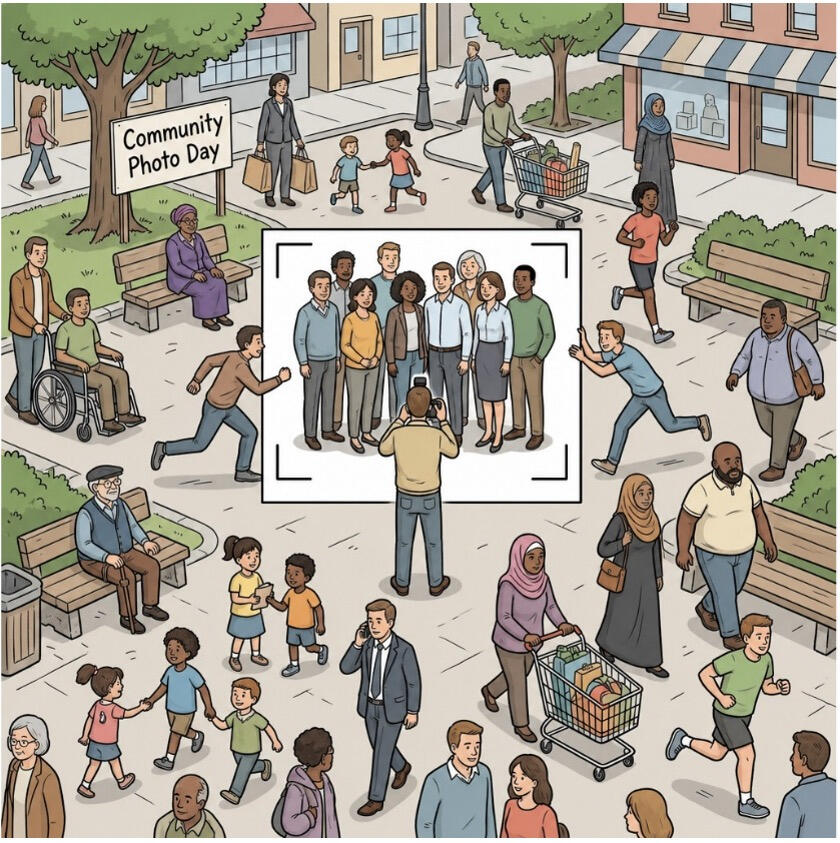
The Moment: The community needs a clearer picture of itself
Decisions about a community are shaped by partial or indirect insight — especially when some voices are harder to reach. Understanding of needs and priorities is filtered through intermediaries and uneven participation that doesn't fully reflect the diversity of lived experience.
A First Move: We design research that is both deeply accessible and analytically rigorous — whether a large-scale representative survey or an in-depth engagement process — to produce a grounded, usable picture that reflects the community as a whole.
Custom Projects
Many of the organizations we work with begin through a First Move. Others come to us with a defined need, a specific question, or a complex situation that does not fit neatly into a single starting point.In these cases, we work more broadly — as advisors, collaborators, and partners — supporting how organizations understand, design, and act on evidence in practice.Engagements are structured to fit the context. Some are tightly scoped and time-bound. Others extend over time, particularly where work spans multiple teams, programs, or decision environments.If you're not sure where to start — or if what you're working on doesn't fit a standard entry point — we're always open to a conversation.
In Practice
These examples show how the work appears in real situations—what’s happening beneath the surface, and how it becomes possible to move forward.
The Moment: Success in one area is weakening the whole
Stabilizing Success
We help make visible how success is being carried across the system—and where it may no longer hold.In one organization, a particular area of work was moving quickly and delivering strong results. It drew attention, energy, and recognition.Over time, people around the work began to stop setting limits. Trade-offs that had initially felt like choices were taken on more quietly, and for some, began to feel like obligations.At first, this wasn’t experienced as a problem. The work was succeeding, and the effort felt worthwhile. But over time, leadership began to notice signs that the pace was no longer being carried evenly—decisions were getting harder to make, and some parts of the work were starting to absorb strain that wasn’t being surfaced directly.What made this difficult was that nothing had clearly “gone wrong.” There was no obvious failure to respond to—only a growing sense that success was becoming harder to sustain.The work focused on making that pattern visible in a way the organization could recognize and act on collectively. Instead of slowing progress, the goal was to see more clearly how results were being produced and where strain was accumulating.That shift made it possible to rebalance attention—so that success could continue without relying on unspoken trade-offs or uneven burden across the system.How the work unfolded
This work began by listening across roles to understand how the work was actually being carried in practice.Patterns that were not visible at a leadership level were surfaced and brought into a shared view.From there, the organization was able to rebalance attention in ways it could sustain.
The Moment: The community needs a clearer picture of itself - and whose voices it reflects
Community Clarity
We help create a more complete and representative understanding of the community to support real decisions.An organization was making significant investments across a large and diverse community, relying primarily on existing relationships and funded partners to understand needs and priorities.Over time, it became clear that this approach, while valuable, was providing only a partial view—particularly when it came to people who were less likely to be reached through formal channels. There was a growing sense that important perspectives were missing, but no clear way to understand what that gap actually looked like.Rather than working only through existing structures, this work took a different approach: creating a direct, large-scale way for people to describe their own experiences, in a way that could be accessed across different contexts.The process is ongoing, but even at this stage, experiences and priorities that were not previously well represented are emerging more clearly—not as isolated concerns, but as part of a more complete picture.This is already beginning to change how decisions are made, creating a stronger basis for setting priorities and shaping investments.How the work unfolded
This work was designed to reach beyond existing channels and capture a broader range of experience.Accessible tools and structured outreach supported wide participation, with careful attention to representation.Analysis focused on identifying patterns across the population and differences between groups to produce a clearer, usable picture of the community.
The Moment: The same work doesn't feel the same to everyone
A Shared View
We help make differences in how the work is experienced visible, so alignment can be rebuilt.A high-performing team was advancing complex work under pressure, with rapid growth and significant expectations. Leadership was focused on delivery and momentum.Within that context, people’s experiences of the work were beginning to diverge. Some were unclear how their roles connected to the larger effort or how decisions were being made. At the same time, leadership—managing a high level of complexity—understood the team to be functioning well and did not have visibility into those differences.Nothing had clearly broken down. But the lack of shared understanding was starting to affect coordination, engagement, and how the team carried the work.The work focused on creating a clear, shared view of how the team was actually experiencing the work—what was consistent, what differed, and what wasn’t visible from where decisions were being made.From there, the team was able to rebuild alignment—clarifying roles, improving communication, and strengthening how the work was carried together.How the work unfolded
This work involved structured listening across the team to understand how the work was experienced in practice.Patterns were synthesized across roles to create a view that both leadership and staff could recognize.That shared understanding created the basis for conversations and adjustments that had not been possible before.
The Moment: When evidence standards quietly set direction
Evidence Alignment
We help clarify what current evidence can support and how it aligns with the decisions it needs to inform.An organization was investing across a range of initiatives, with the expectation that impact could be understood in ways that supported oversight and decision-making.While meaningful work was being done, available reporting focused on activities and outputs. This made it difficult to compare across initiatives or form a clear view of overall impact.At the same time, there was reluctance to impose simplified metrics, as this risked obscuring important differences in how impact was being produced.This created a tension: the need for a coherent, decision-ready view of impact without distorting the work itself.The work focused on aligning evidence with decision needs—making it possible to understand results within context while still producing a shared view at a broader level.This allowed impact to be seen and communicated more clearly, without narrowing what counted.How the work unfolded
This work began by reviewing existing data, reporting, and expectations for how evidence would be used.Analysis focused on what current evidence could credibly support and where misalignment existed.From there, a structured path was defined to strengthen alignment between evidence, decisions, and how the work actually produces results.
When something isn't lining up...
When something isn’t lining up, it’s often hard to see clearly what’s actually going on—let alone what to do next. The signals are there, but they’re easy to misread or dismiss when you’re inside the work.We start by looking more closely at what’s actually happening beneath the surface—what’s shifting, where strain is showing up, and what may be driving it.From there, the focus is on identifying a useful next step: what kind of movement is possible, and whether there’s a role for us to play in supporting it.
Start a focused conversation
If you're ready to talk it through, you can choose a time for a 30-minute conversation. We'll review what you've shared in advance so we can use the time well.Click here to schedule a conversation
Not sure if a conversation is the right next step?
You can share a bit about what's going on, and we'll follow up with you to help you figure out whether and how to move forward.Click here to share your context